

Aircraft Collision Warning – FLARM & Enhanced Safety
See more, react earlier: an aircraft collision warning system based on FLARM and compatible technologies significantly increases situational awareness, for gliders, ultralights and powered aircraft. Discover available systems and integrate them seamlessly into your cockpit. Learn more about aircraft collision warning solutions .

Why Collision Warning Is Essential Today
“See & avoid” reaches its limits in dense traffic, reduced visibility or high cockpit workload. Time-critical converging situations are often detected too late.
Collision warning systems calculate the projected flight paths of nearby aircraft using position, direction and speed data, and issue prioritised alerts. They close perception gaps and support earlier, targeted visual scanning.
Practical Benefits of Collision Warning Systems
- Early warning of converging flight paths and overtaking situations
- Graduated, clear alerts (visual/acoustic) instead of constant alert fatigue
- Enhanced “see & avoid” even outside the direct line of sight
How Collision Warning Works in Principle
Data basis: GNSS position, track and speed, complemented by altitude information and motion models.
Conflict model: Prediction of relative motion, evaluation based on time to conflict (TTC) and minimum horizontal/vertical separation.
Alert logic & cooperation: Multi-level alerts from “traffic” to direct collision warning; standardised protocols (e.g. FLARM) enable mutual data exchange.
Buying FLARM: The Proven Collision Warning System
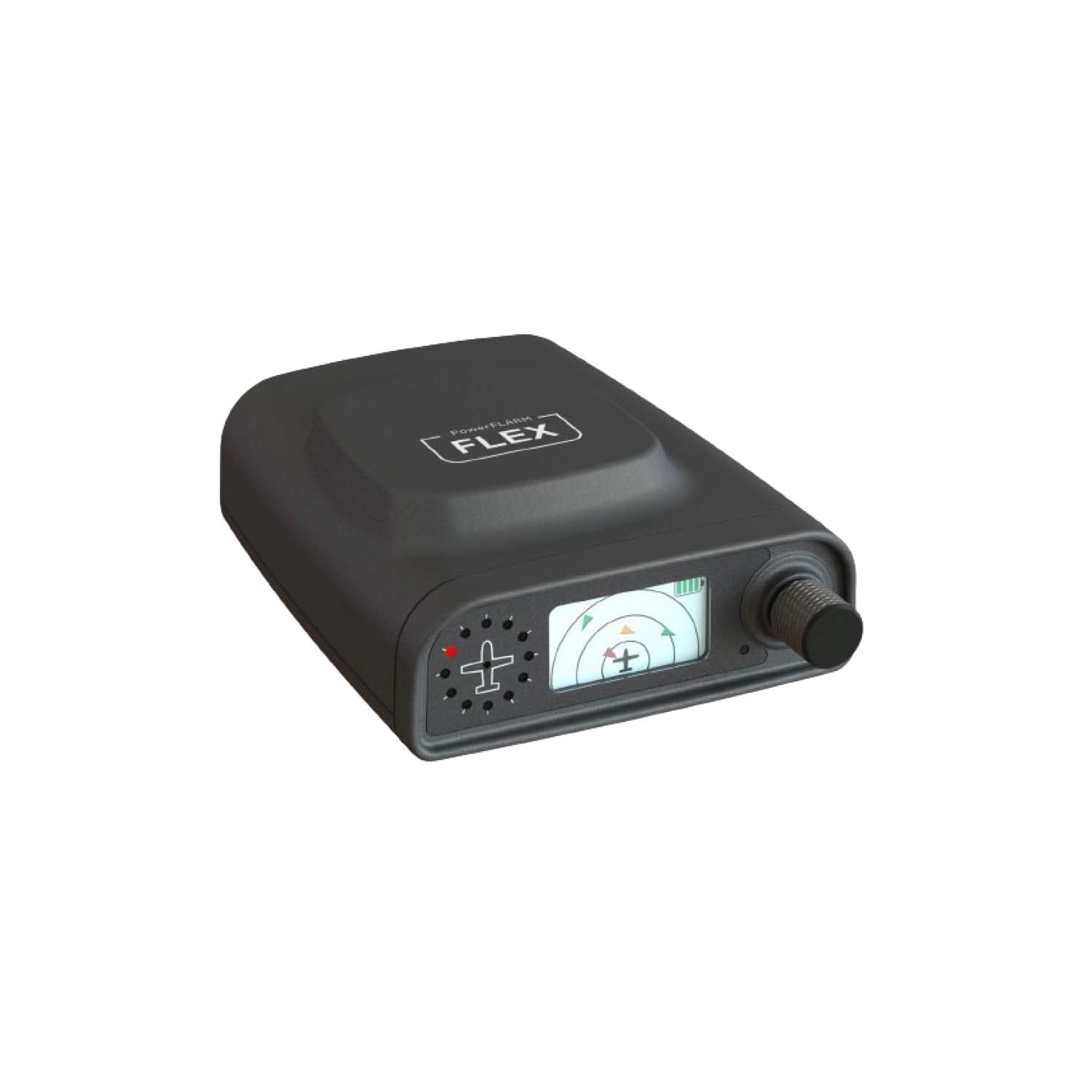
Applications: Gliding, ultralight/LSA, powered aircraft, helicopters. FLARM transmits and receives relevant motion data, calculates conflicts in real time and provides visual and acoustic alerts.
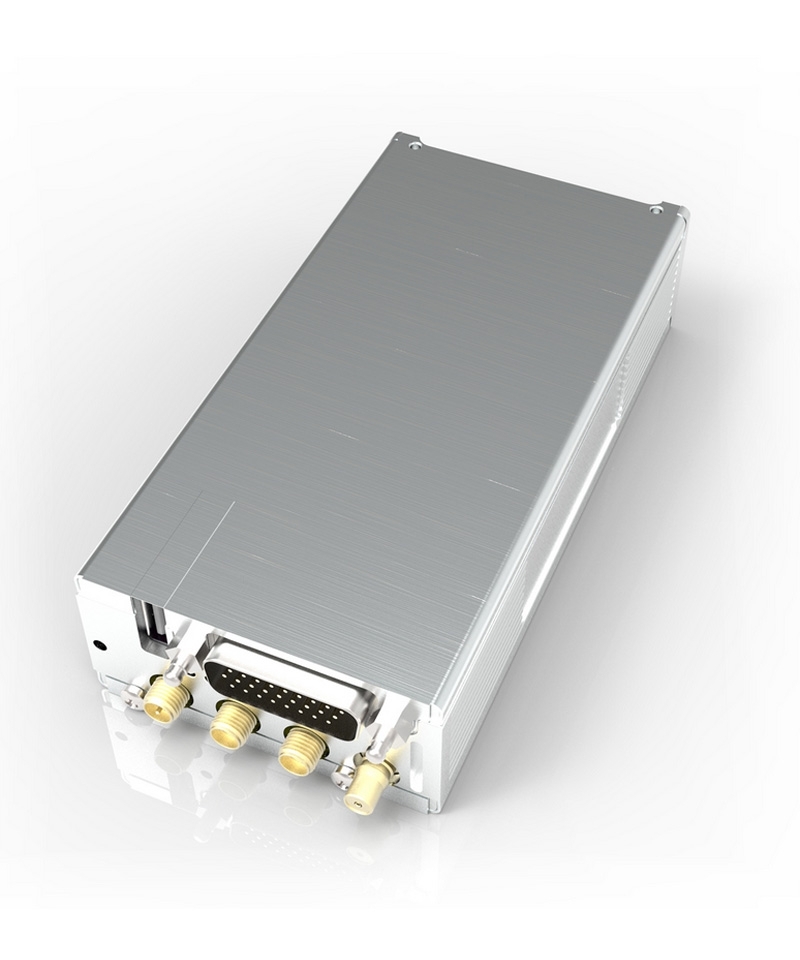
- Form factor & installation: portable or panel-mounted
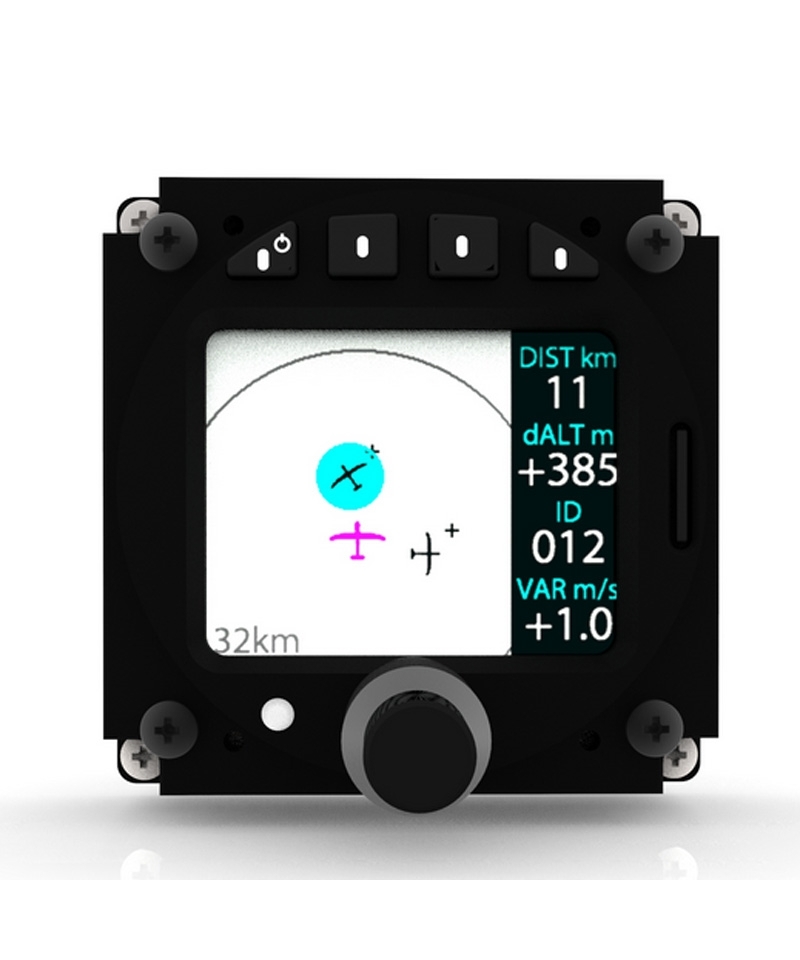
- Display & integration: panel display, moving map or Garmin GPS connection
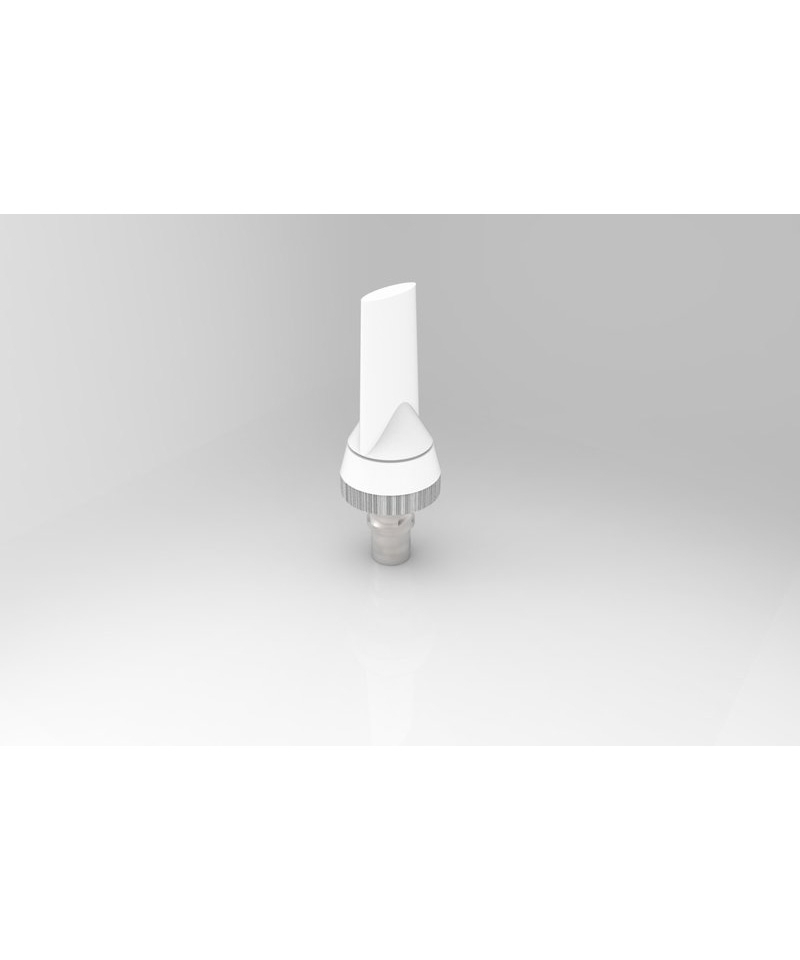
- Antenna concept: internal vs. external (greater range & coverage)
- Data & updates: obstacle databases, firmware, licence model
- Power & interfaces: onboard power, serial/Bluetooth connections
Compare FLARM options and configure your setup now
Compatibility & Cockpit Integration
Alerts can be displayed on moving maps, Garmin displays, apps or directly in the headset. Proper antenna installation significantly improves range and stability.
Selection Guide: Which Collision Warning Fits?
- Gliding & ultralight: lightweight, energy-efficient FLARM devices
- Powered aircraft & helicopters: portable or fixed solutions with display integration
- Drones/UAS: depending on mission, additional ADS-B or Remote ID solutions
Safety in Combination: Transponders & Workflows
Transponder ≠ collision warning: Aircraft transponders support traffic awareness but do not replace conflict-based warning systems, as they do not provide approach predictions.
- Perceive the alert (audio/display)
- Check visual direction & relative position
- Confirm conflict and adjust course/altitude according to procedures
- Train the workflow regularly (e.g. simulator)
Start directly in our avionics overview , from modern radios to innovative uAvionix systems.
Quality, Service & Expert Advice
Whether panel installation or portable setup: we support you with device selection, antennas, cabling and software. Get personal advice, contact us now and start your project.
FAQ: Aircraft Collision Warning
Which aircraft types are collision warning systems suitable for?Gliders, ultralights, powered aircraft and helicopters – key factors are available space, power supply and cockpit interfaces. |
Do systems also detect obstacles and restricted zones?Many devices use integrated databases for obstacles and alert zones. Regular updates are essential for reliable warning performance. |
How do collision warning systems communicate with each other?Via standardised protocols such as FLARM, exchanging position, motion and prediction data between aircraft. |
Which regulations apply?Requirements vary by country and operation type. Clarify approval before purchase, we’ll be happy to advise. |